
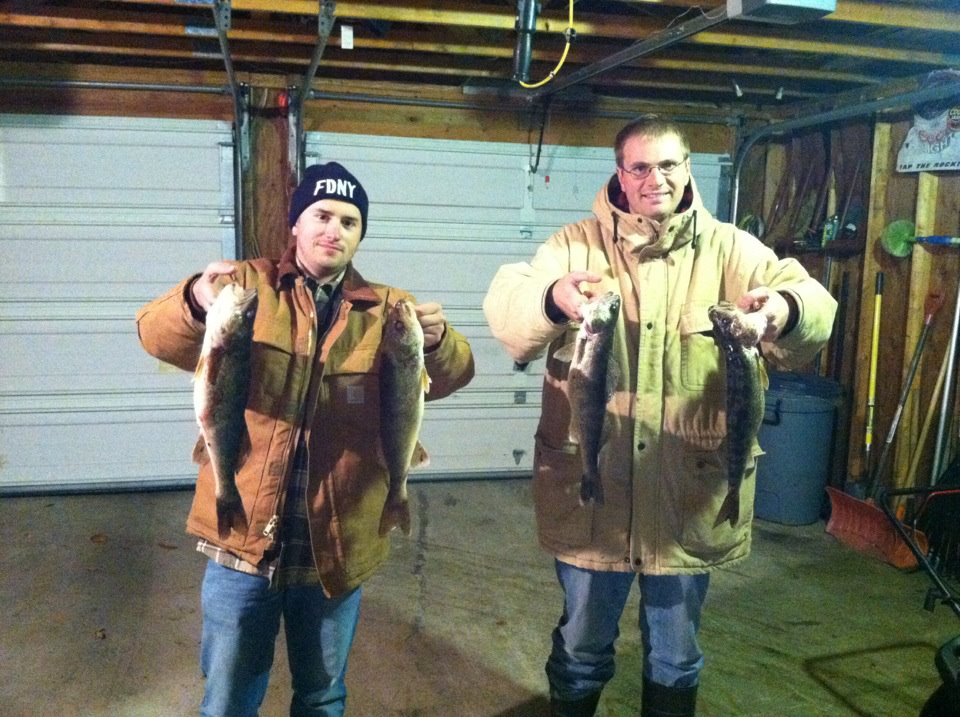
I moved out of Syracuse, NY a little over three years ago and one of the things I miss most (other than dirt cheap rent) is the Fall Walleye Fishing on Oneida Lake. Walleye fishing becomes one of the hottest attractions of the fall, fish start becoming aggressive in their feeding routines, chasing bait into the shallower waters and circling the lake with a nightly feeding “schedule.”
What sets this time of year apart from the springtime walleye fishing, is the lure selection. In the spring we strictly utilized a 3/8” oz jig dipped with a juicy nightcrawler tail, jigging it on the bottom around 15 feet. As the temperature increases, the fish would head towards deeper waters, thus requiring a heavier jig. With fall the water temperature dropping, large schools of walleye gravitate back towards the shallows, consistently circling the lake for balls of baitfish. With the fish coming shallower and following a more aggressive feeding pattern, stick baits would be our main lure choice. We’ve had great success with the Rapala X-Rap. This lure is a “slash” bait that suspends in the water and produces a radical motion. The reason I love this bait so much is that it is designed for the shallower water and the color patterns offered are extremely realistic. The X-Rap gives you that edge in weed “evadement” and also allows you to cast a significant distance with its long cast technology. In my opinion, this is hands down the top bait to use in the fall. Just cast it out there and hook up.

The best time to fish in the fall is dependent on a few environmental factors:
- Water temperature: colder temperatures allow fish to swim into the shallows feeding on baitfish.
- Wind direction and speed: generally you want to fish into the wind or in a cove where the wind is pushing waves to shore. This will push the bait closer and in turn schools of walleye will aggressively follow.
- Time of day: preferably in the evening within an hour of sunset. You can start fishing in October and end Mid-November, just keep in mind, the activity is dependent on the water temperature as mentioned above
 Green Lake Chronicles